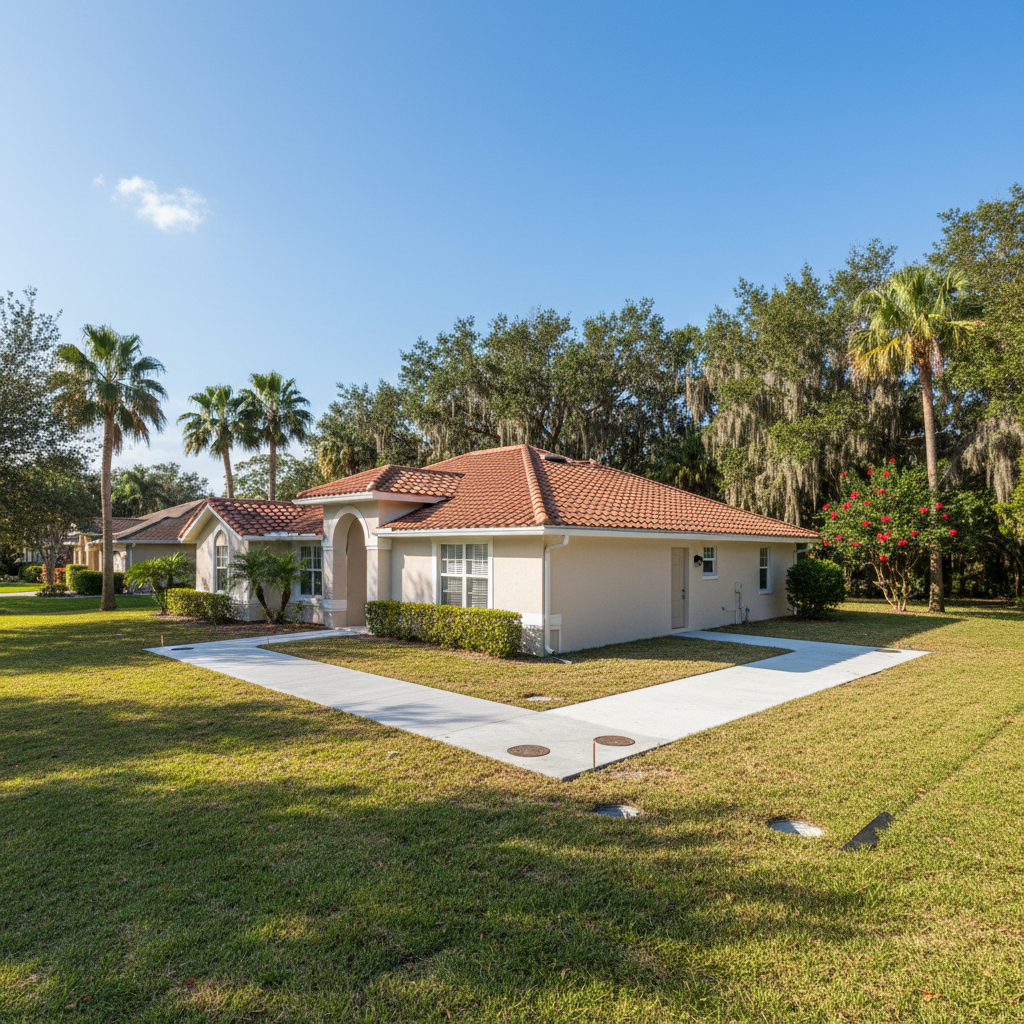
You just noticed a crack. Maybe it's in your stucco, slowly climbing up from the foundation, or perhaps it's just a tiny hairline split in your tile grout that definitely wasn't there last week. Your gut probably clenched a little, didn't it? Here in Naples, with our unique soil and our famously unpredictable weather, foundation issues are just something you really can't ignore.
I've been working on homes around here for years, from the older, charming bungalows in Old Naples to the newer, sprawling estates out in Port Royal. I've seen a lot of foundations, and I can tell you this much: not all cracks are created equal. Some are just cosmetic, a normal part of a house settling into its spot. Others? Those are the ones that quietly hint at bigger problems underneath.
Why Naples Foundations Are Different
Our soil plays a huge role in all of this. You're not dealing with bedrock here like folks do up north. We've got a lot of sandy, often loose soil, and sometimes, depending exactly where you are, a pretty high water table. This means our foundations are built on different stuff, and they react differently to changes, plain and simple.
Think about it: we get those heavy rainy seasons. That water soaks right into the ground. Then the dry season hits, and everything dries out. This constant expansion and contraction of the soil — especially if it wasn't properly compacted to begin with, or if your drainage is just plain bad — can put a ton of stress on a foundation. I've personally seen homes in areas like Golden Gate Estates, where the soil conditions can vary wildly even within a single property, show clear signs of differential settlement because of this.
And then there's the 'salt air' factor. While it doesn't directly cause foundation cracks, it's a constant reminder of the harsh environment our homes have to put up with. Everything here takes a beating, and your foundation is certainly no exception.
What to Look For (And What It Might Mean)
So, you've spotted a crack. What exactly should you be looking for?
- Hairline cracks in stucco or drywall: These are often just cosmetic. They're usually thin, pretty consistent, and they don't seem to get wider over time. Could be normal settling, temperature changes, or just the house breathing.
- Stair-step cracks in brick or block walls: Now these can be a red flag. If they're wider than a quarter-inch, or if you notice them getting wider, that's a sign of potential foundation movement.
- Horizontal cracks: These are almost always serious. They can point to pressure from outside (like hydrostatic pressure from water) or bigger structural issues. Get these checked out fast, really.
- Doors and windows sticking: If your doors suddenly don't close right, or your windows are a pain to open, it could be that the frame is twisting because of foundation settlement.
- Sloping floors: You might not notice it at first. But if you put a ball down and it rolls to one side, or you feel like you're walking uphill indoors, that's a pretty clear sign something's off.
- Gaps around window and door frames: If the trim is pulling away from the wall, or you see light through gaps that weren't there before, that's another indicator.
Don't try to play detective and diagnose it yourself with just a level and a flashlight. You need someone who truly understands the local geology and our specific building practices.
Why Local Expertise Matters for Foundation Repair
You wouldn't hire a snowplow driver to fix your air conditioner, would you? Same goes for foundation work here in Naples. A contractor from, say, Colorado, might know foundations in general, but they won't know the specifics of our sandy soil, our high water table, or the particular challenges of building codes and insurance requirements in a hurricane zone. It's a completely different ballgame down here.
When I do an inspection with Naples Structural Engineering, I'm not just looking at the crack itself; I'm looking at the whole picture. I'm considering the age of your home, the type of foundation it has (slab, crawl space, pilings), the surrounding landscape, and even the history of the property. We're looking at drainage, tree roots, plumbing leaks – all the things that can contribute to foundation distress here in Southwest Florida.
Repairing a foundation isn't a one-size-fits-all job. It might involve underpinning, slab jacking, or addressing drainage issues. The right solution depends entirely on the specific problem and the local conditions, period. Getting it wrong can be incredibly costly, not just in terms of money, but in terms of the long-term integrity of your home.
So, if you're seeing signs of foundation trouble, don't wait around. Get a professional, local opinion. It's the best way to protect your investment and keep your Naples home standing strong for years to come.