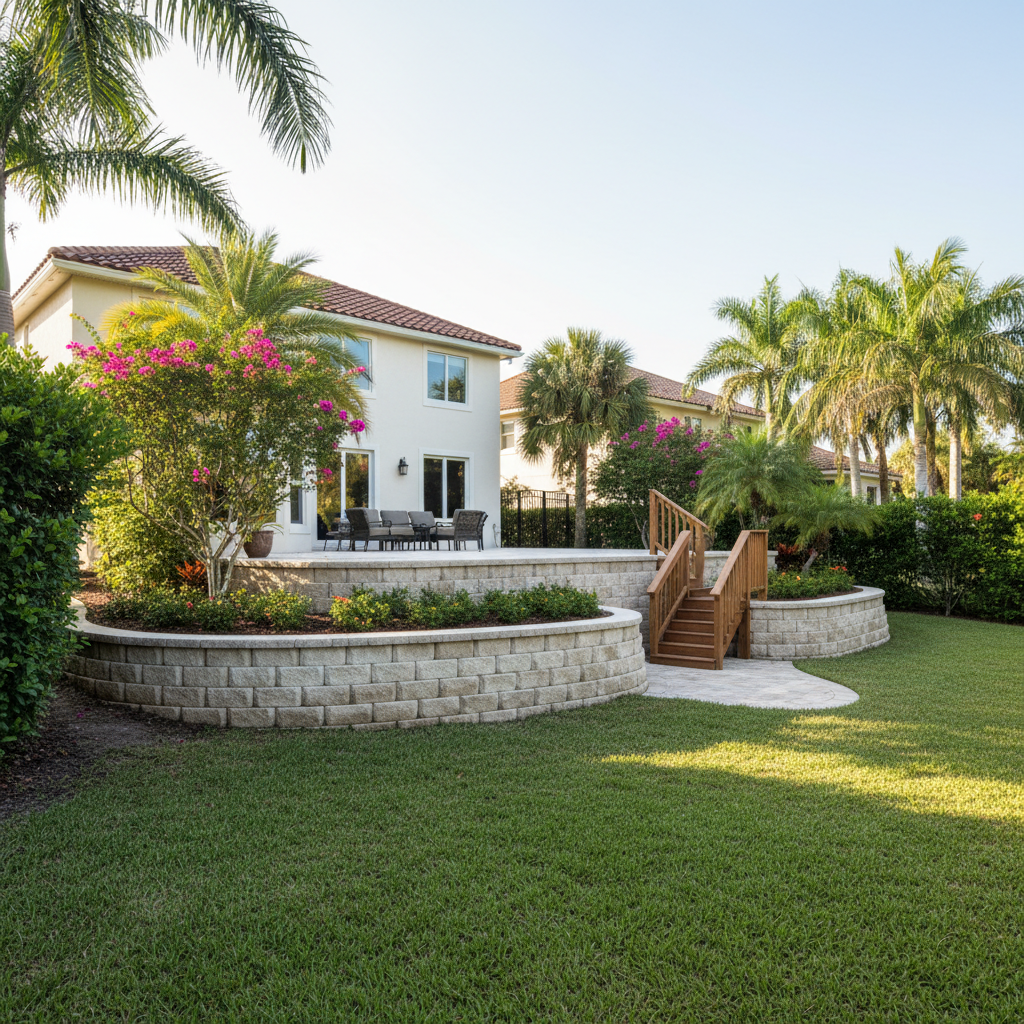
You see retaining walls all over Naples, especially in those beautiful waterfront communities or where folks want to maximize their usable yard space. They look simple enough, right? Just a bunch of blocks or concrete holding back some dirt. But I'm here to tell you, as someone who's engineered more than a few of them, a retaining wall in Southwest Florida is a whole different beast compared to one up north.
It's not just about how it looks; it's about preventing a real mess. When you're dealing with our sandy soils, heavy rains, and the constant threat of storm surge, a poorly designed or installed retaining wall won't just look bad – it'll fail. And when it fails, it can take your landscaping, your pool deck, or even part of your foundation with it. That's why you can't just slap one together and hope for the best, can you?
Why Naples Retaining Walls Are Different
Let's talk about what makes our local conditions so unique for retaining wall design. It's not just one thing; it's a combination:
- Our Soil: We've got a lot of sandy, loose soil down here. It's great for drainage in some ways, but it doesn't have the same cohesive strength as the clay or loamy soils you might find elsewhere. When it gets saturated, it can lose even more of its internal friction, becoming a lot like quicksand under pressure. That means a retaining wall needs to be designed to hold back a much less stable material.
- Heavy Rainfall: We get serious downpours. A wall that's not properly designed for drainage will quickly build up hydrostatic pressure behind it. Imagine a swimming pool full of water pushing against your wall – that's what happens when water can't escape. This pressure is a huge factor in wall failures. We're talking about systems that need to handle inches of rain in an hour, not just a gentle drizzle.
- Waterfront Properties: A huge chunk of Naples is on canals, bays, or the Gulf. If your retaining wall is near water, you've got tidal fluctuations, potential for erosion at the toe of the wall, and sometimes even saltwater intrusion to consider. These walls aren't just holding back soil; they're often acting as seawalls or revetments in disguise, and that requires a completely different approach.
- Hurricane Season: This is Florida, after all. High winds, storm surge, and torrential rains all combine to put immense stress on any exterior structure. A retaining wall needs to be able to withstand these forces without washing out or collapsing.
I've seen plenty of walls built without proper engineering, and it's always the same story: bowing, cracking, leaning, or outright collapse. It's an expensive fix, and often, it could have been avoided with a solid design upfront.
Common Projects & What We Consider
You'll find retaining walls in all sorts of places around Naples. Maybe you're building a new home on a lot with a significant grade change, or you're adding a raised patio. Perhaps you're shoring up a canal bank behind your Port Royal estate, or creating terraced gardens in a tight space. Even something as simple as a raised planter bed, if it's large enough, needs careful thought.
When Naples Structural Engineering looks at a retaining wall project, we don't just sketch out some blocks. We consider:
- Soil Conditions: This is always step one. We often recommend a geotechnical report to understand exactly what kind of soil we're dealing with, its bearing capacity, and its characteristics when wet.
- Wall Height and Surcharge: How tall does the wall need to be? Is there anything on top of it that will add extra weight, like a driveway, a building, or heavy landscaping? This 'surcharge' significantly increases the pressure on the wall.
- Drainage: This is huge. We design for proper drainage behind the wall, often incorporating gravel backfill, perforated pipes (weep holes), and sometimes even geotextile fabrics to prevent soil migration. Getting the water out is key.
- Materials: Concrete blocks, poured concrete, timber, gabions – each has its place. We'll recommend materials that are appropriate for the specific application, soil type, and aesthetic goals, always keeping durability in our climate in mind.
- Foundation & Reinforcement: A retaining wall needs a solid footing, especially in our soils. We'll specify the proper depth and width of the foundation, and if it's a taller wall, we'll design internal reinforcement like rebar or geogrid to give it the strength it needs.
- Local Codes: Collier County and the City of Naples have specific building codes and requirements for retaining walls, especially those over a certain height or near property lines. We make sure everything is up to snuff.
You don't want to cut corners on this kind of project. A retaining wall is a structural element, plain and simple. It's holding back tons of earth, often with water pressure thrown in. Getting it wrong can lead to costly repairs, property damage, and even safety hazards.
If you're planning a project that involves a retaining wall, do yourself a favor and get a qualified structural engineer involved early. It's an investment that pays off by preventing headaches and ensuring your property is safe and sound for years to come.